Own
Repeatable acres, trained crew, local support, stocked parts, and a clear compliance path.
Spray drones
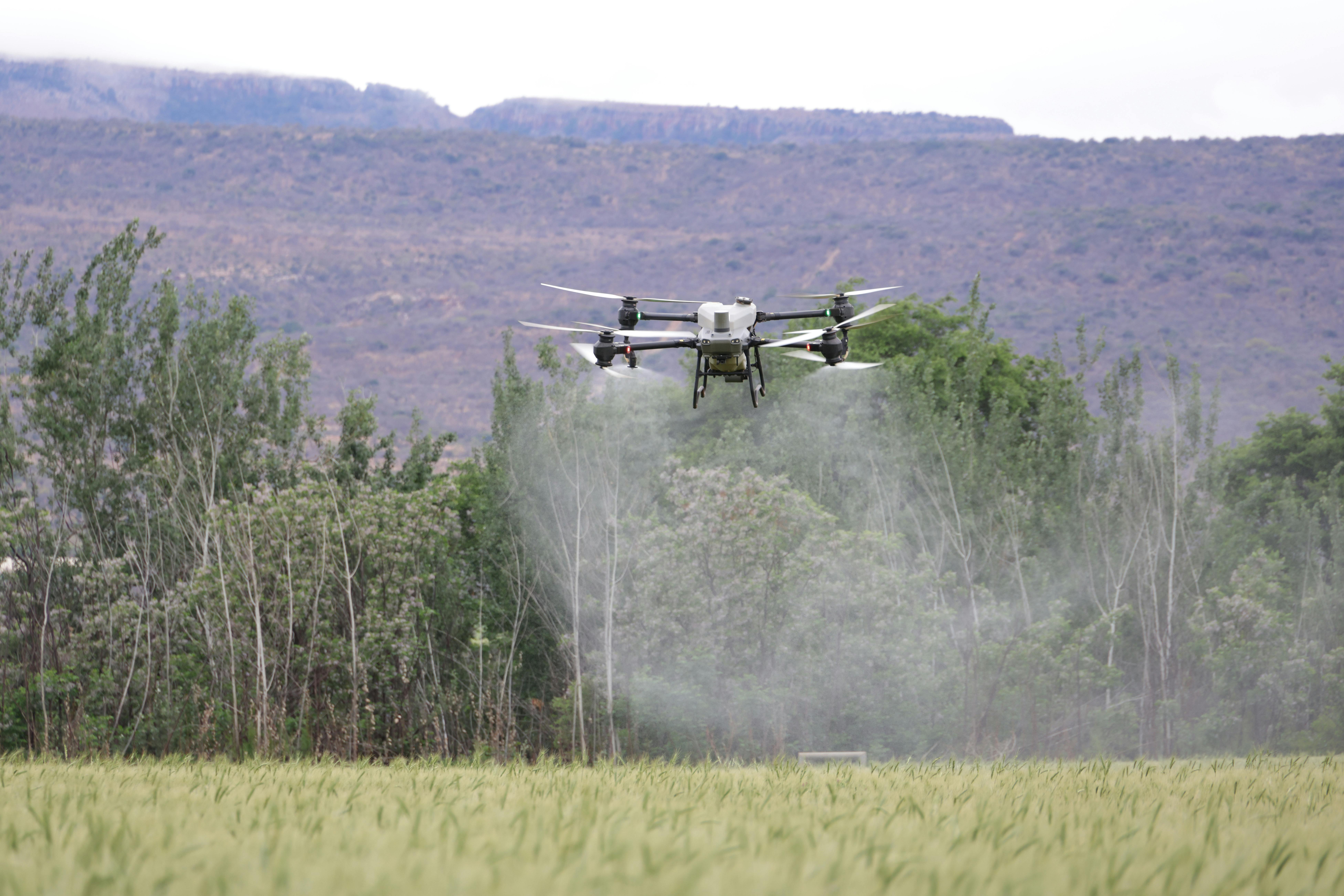
Tank capacity is only the visible number. Real output comes from swath, application rate, refill cadence, batteries, label limits, crop canopy, and whether the drone is solving a wet-field or access problem.
Sortie productivity
Spray output rises when every station is ready before the drone lands: mix, fill, battery, launch, pass, record, repeat. The weak station sets the day's ceiling.
The calculators below attach to the slowest stations in this loop. A large tank cannot fix a slow refill lane; a fast aircraft cannot outrun weak battery logistics.
01
Carrier volume, product label, agitation, and tender setup decide the batch rhythm.
02
Tank coverage shows how many acres fit before the next landing.
03
Swath, speed, overlap, and turns set the practical acres/hour ceiling.
04
Landing-zone layout and crew roles decide whether the aircraft waits.
05
Charging lanes and spare packs decide whether sorties stack or stall.
06
Weather, field, product, rate, and as-applied records close the job.
The three operator calculators below sit at different points in the same field-day chain: time ceiling, refill cadence, and end-to-end productivity. Run them with conservative numbers before comparing aircraft or quoting custom work.
The aircraft is visible, but the landing zone decides output. Before comparing models, estimate gallons per acre, acres per fill, battery cycle time, crew roles, and the support plan for parts during a narrow spray window.
Own vs hire
Repeatable acres, trained crew, local support, stocked parts, and a clear compliance path.
Occasional rescue work, first-season testing, specialty crop access, or no appetite for batteries and spares.
No recurring job, unclear label fit, weak dealer support, or uncertain state pesticide rules.
Read in this order: start with the mechanics guide to understand refill loops and crew workflows, then use the decision-path guide to identify your job (scout, map, spray, or service), then move to the model comparison to evaluate DJI, XAG, Hylio, and ABZ side by side.
Refill loops, swath math, label compliance, ownership vs hiring a service.
Scout, map, spray, orchard, or custom service — choose the platform around the job.
DJI Agras T50, XAG P100 Pro, Hylio ARES, and ABZ L30 v2 side by side.