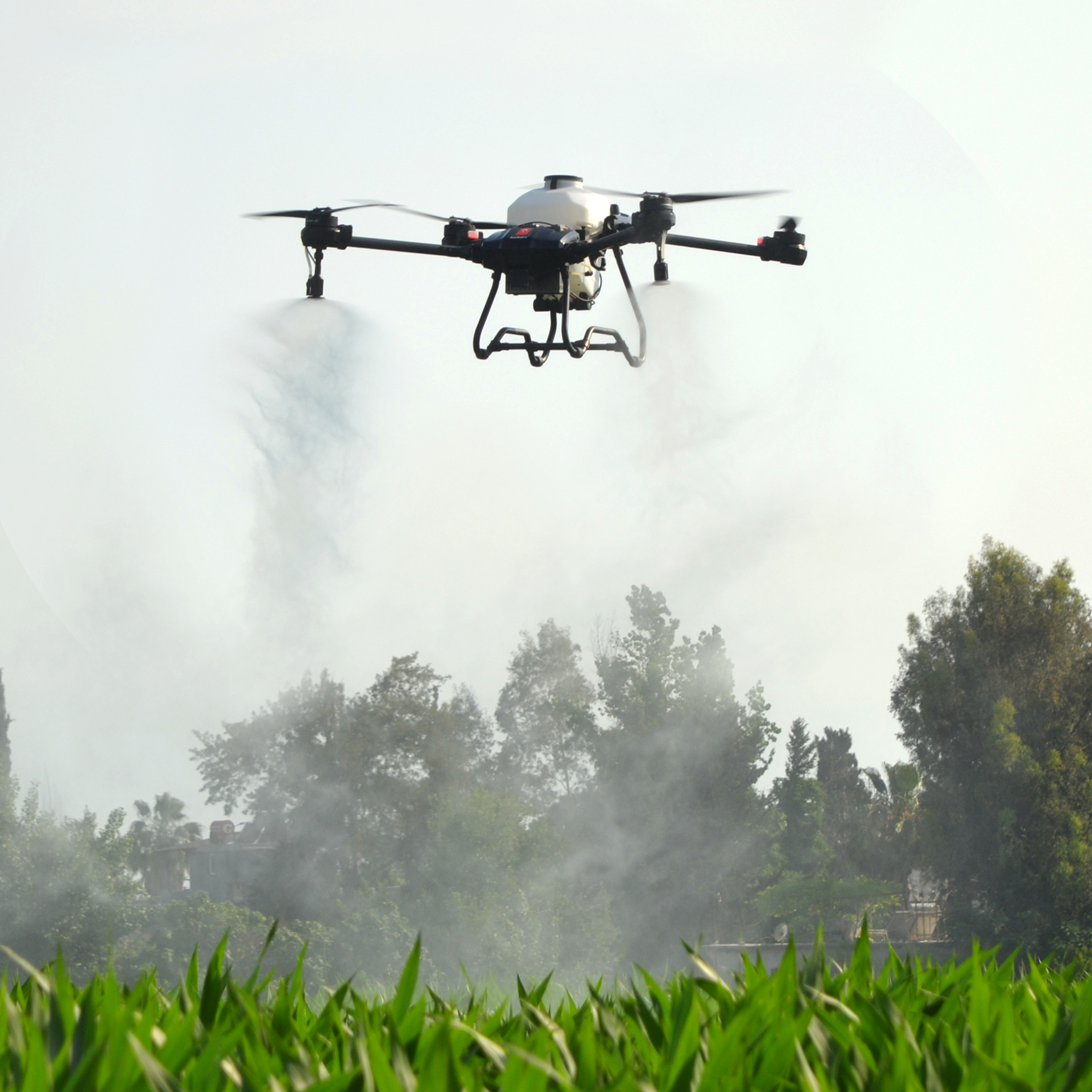
Why tank coverage matters
Tank size controls refill cadence, not just headline payload. Lower-volume work may make a drone look fast on paper; higher GPA herbicide or orchard work can turn the same platform into a refill operation with a drone attached.
Always cross-check the chemical label. If the label calls for a minimum spray volume, a drone workflow has to meet that volume or the operation is not ready.
Worked examples
Herbicide benchmark. A 10-gallon tank with 5% unusable reserve leaves 9.5 usable gallons. At 2 gallons per acre, that is 4.75 acres per fill. A 100-acre job would require a little more than 21 fills before accounting for partial loads, moving the landing zone, or mixing delays.
Assumptions to check
- The product label allows the selected gallons per acre.
- The drone can carry the planned volume safely in the conditions.
- The crew can mix and refill fast enough to keep the aircraft moving.
- Reserve volume is realistic for pump pickup and end-of-load behavior.
What changes the answer fastest
Application rate dominates tank coverage. Doubling gallons per acre cuts acres per fill in half, even if the aircraft, pilot, and field are unchanged. That is why tank math belongs near the top of every spray-drone buying conversation.