Model landscape
Agriculture drone models: compare the job, not just the payload.
The useful buyer guide is not a ranked list. DJI, XAG, Hylio, ABZ, and other agriculture-drone makers serve different support networks, payload classes, compliance preferences, and field workflows. Start with the work you need done, then compare models.
The agriculture-drone market is splitting into three practical lanes: scouting and mapping drones, medium spray platforms, and heavy spray / spread systems. The wrong way to shop is to sort by payload and call the biggest number the best drone. The right way is to match the aircraft, support network, and workflow to the job that repeats on your farm or service route.
Specific models in this comparison
Each card carries the position the platform actually fills, the manufacturer's headline specs, and the two questions every operator should answer before ordering: where this aircraft fits, and what to verify before it ships. Numbers are planning inputs — refill cadence, label fit, crop canopy, terrain, and crew rhythm pull every spec back toward reality.
Compare by job
Pick the recurring job before comparing spec sheets.
Payload is only useful after the work is defined. Use this board to decide which numbers in the tear sheet deserve attention and which ones are just brochure gravity.
Broadacre spray
Best signal
Tank cadence, effective swath, flow ceiling, and refill crew.
Likely lane
Large spray/spread platform with strong local parts support.
Proof before purchase
Run acres/hour and tank coverage with the label rate you will actually use.
Orchard / specialty crop
Best signal
Access, canopy target, drift control, obstacle sensing, and setup support.
Likely lane
Smaller or specialty-configured spray platform before raw payload.
Proof before purchase
Ask for crop-specific nozzle, droplet, swath, and tree-row examples.
Custom applicator / service provider
Best signal
Uptime, repair turnaround, training, insurance, and records workflow.
Likely lane
Commercial platform with a support contract and stocked spares.
Proof before purchase
Price the full system, then model the field-day bottleneck with batteries.
Small acreage
Best signal
Transport, refill simplicity, training burden, and dealer proximity.
Likely lane
Right-sized tank and simpler support can beat headline capacity.
Proof before purchase
Check whether the job repeats often enough to own instead of hire.
Mapping-first farm
Best signal
Imagery workflow, ground-truth process, and whether spray is even needed.
Likely lane
Mapping/scouting aircraft first; spray platform only if applications repeat.
Proof before purchase
Confirm the flight changes a field decision before buying spray hardware.
Spec tear sheet
Commercial agriculture drone comparison: specs translated into field consequences
Manufacturer figures are planning inputs. The field column explains how the number behaves once swath, label rate, refill cadence, batteries, and support enter the job.
Source basis
Manufacturer specs only
Last checked per model
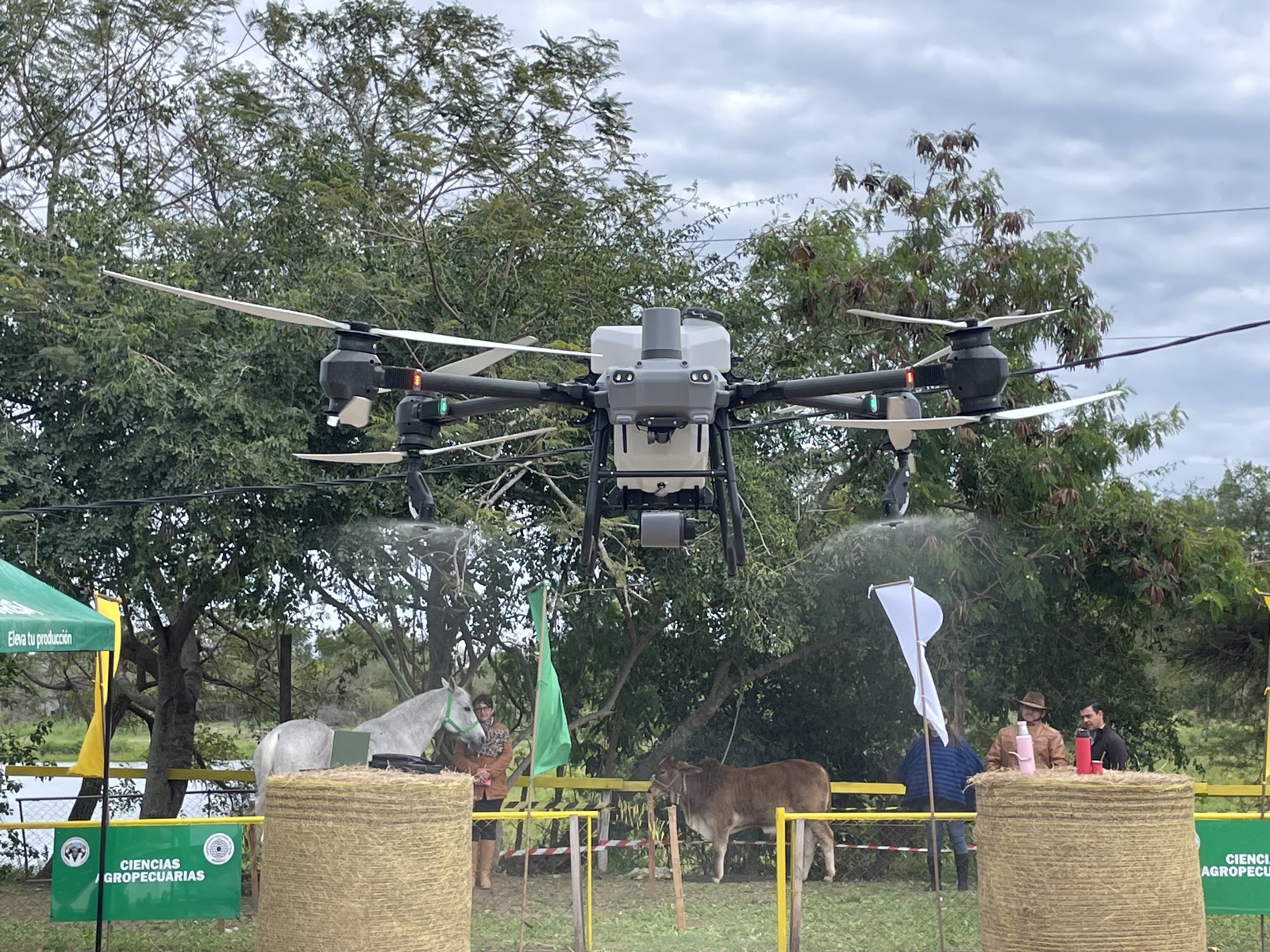
01 / Default benchmark
DJI Agras T50
High-volume global spray/spread platform
Last checked: May 17, 2026
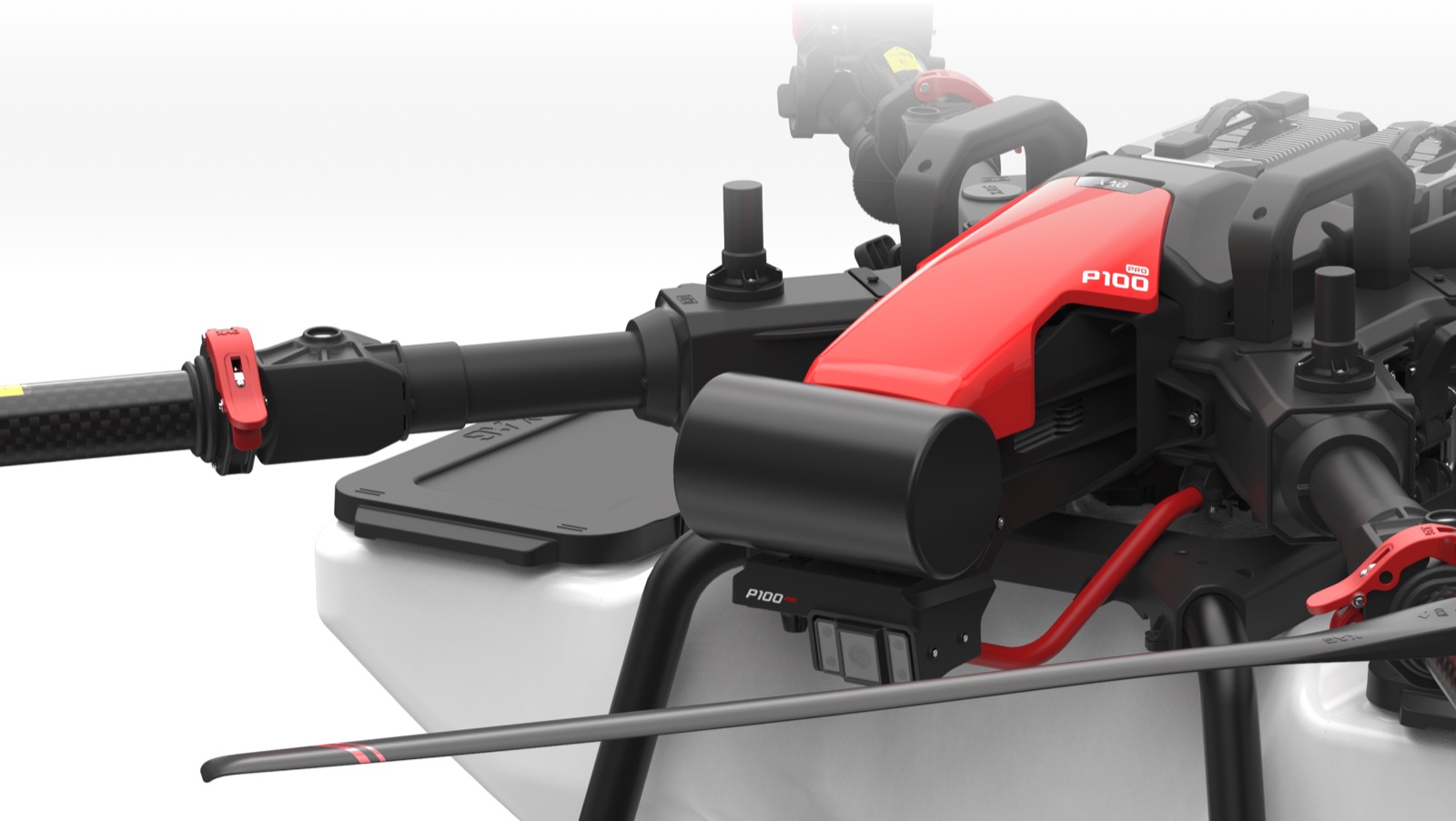
02 / Heavy-platform alternative
XAG P100 Pro
Modular spray/spread focus, large class
Last checked: May 17, 2026
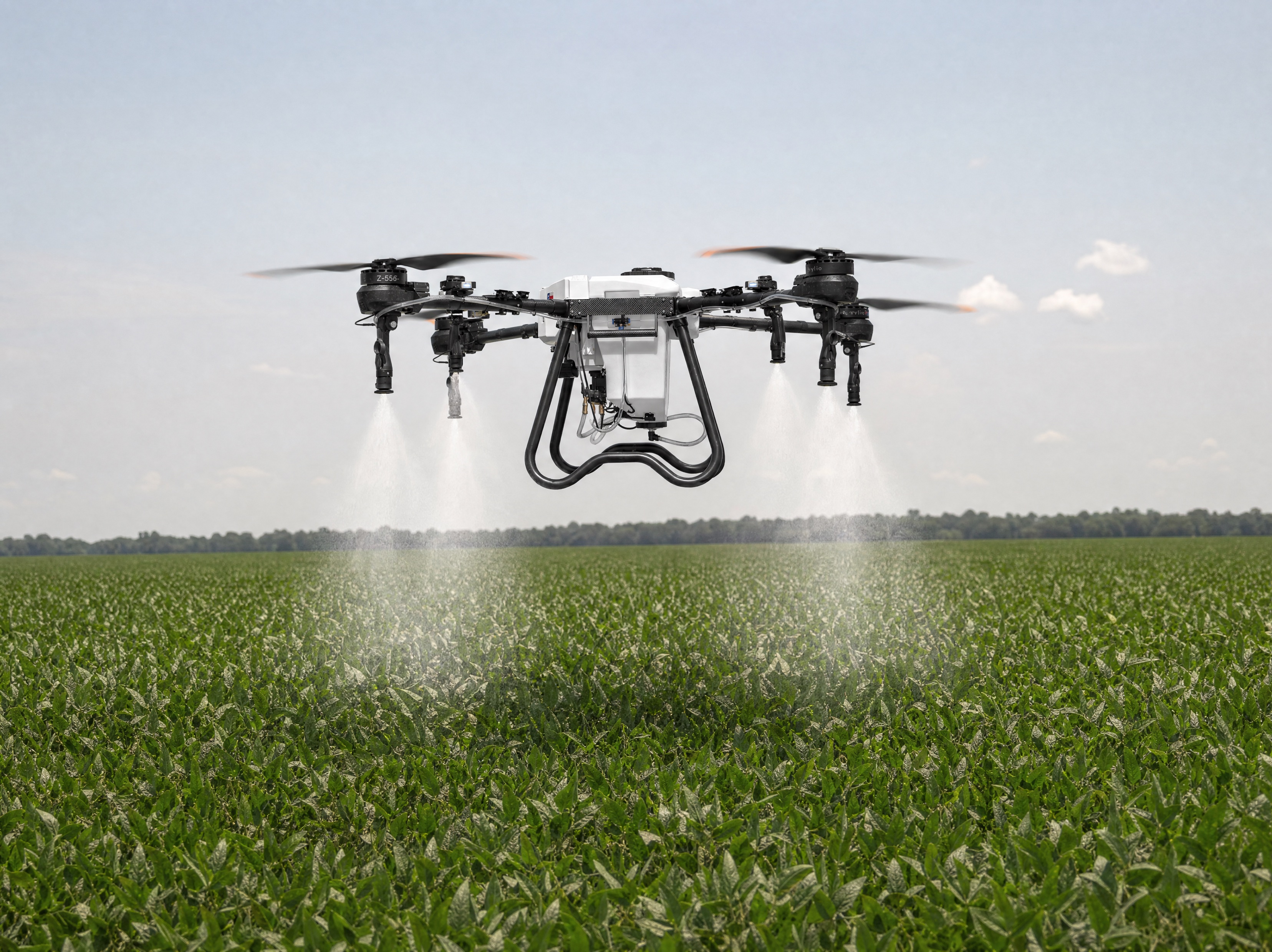
03 / U.S. service-business angle
Hylio ARES
U.S.-built commercial spray drone
Last checked: May 17, 2026
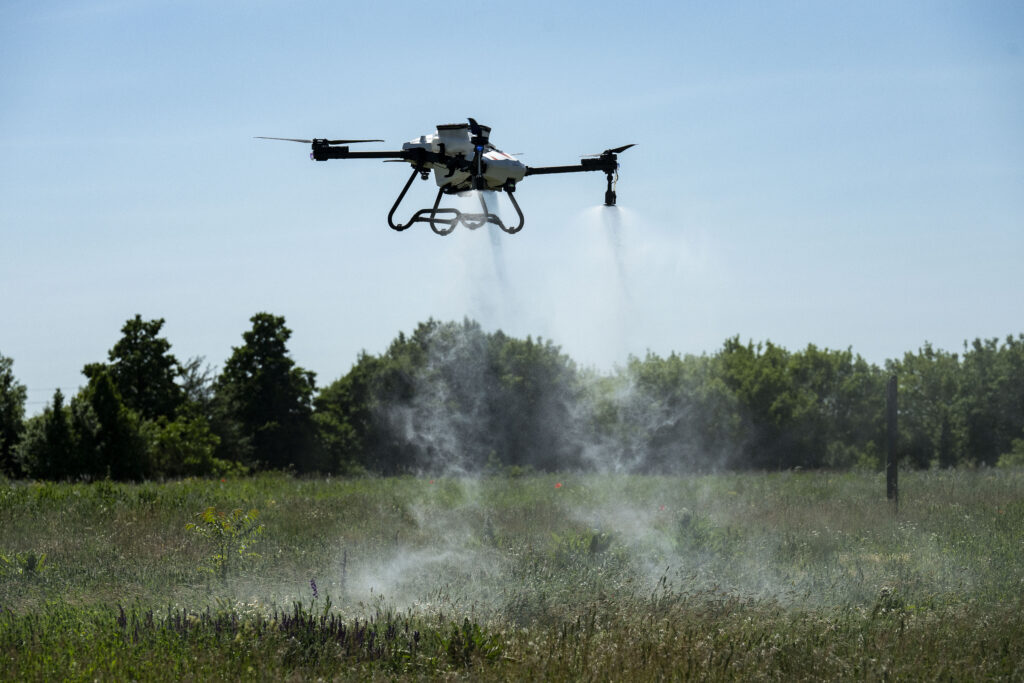
04 / Smaller European class
ABZ Innovation L30 V2
European agricultural spray drone, 30 L class
Last checked: May 17, 2026
Tank
Tank volume sets refill cadence once the label rate is known.
DJI Agras T50
40 L
Large enough for broadacre work; still refill-bound at higher GPA.
XAG P100 Pro
50 L
Largest tank here; support and refill handling decide whether it pays.
Hylio ARES
13 gal liquid / 20 gal spreader
Comparable liquid class with service-business workflow emphasis.
ABZ Innovation L30 V2
30 L
Smaller class; can fit irregular fields but refills arrive sooner.
Spray width
Effective swath drives acres/hour, but crop, droplet target, and validation narrow it.
DJI Agras T50
4-11 m
Wide row-crop potential; verify treated width.
XAG P100 Pro
5-10 m
Similar large-platform planning band.
Hylio ARES
Varies by config
Dealer/job setup matters more than a single spec.
ABZ Innovation L30 V2
Not directly listed
Treat swath as a calibration question.
Droplet range
Droplet range affects drift control, coverage target, and whether the setup fits the label and crop.
DJI Agras T50
Not directly comparable
Verify nozzle / atomizer setup by product and crop.
XAG P100 Pro
60-400 μm
Published RevoSpray 3 range; select for drift and coverage target.
Hylio ARES
Not directly comparable
Ask for atomizer/nozzle range by configuration.
ABZ Innovation L30 V2
Not directly comparable
CDA setup requires job-specific validation.
Max flow
Flow rate determines whether speed, swath, and GPA can coexist without starving the pattern.
DJI Agras T50
16-24 L/min
Enough ceiling for multiple nozzle configurations.
XAG P100 Pro
22 L/min
Strong broadacre figure; label rate still controls use.
Hylio ARES
Not directly comparable
Ask for pump/nozzle configuration by job.
ABZ Innovation L30 V2
16 L/min
Good for the smaller class; match to GPA and swath.
Rated payload
Payload matters only after flight legality, battery draw, support, and carrier volume are solved.
DJI Agras T50
Not directly listed
Use published tank/spreader limits instead.
XAG P100 Pro
50 kg
Heavy-platform class; transport and support rise with it.
Hylio ARES
110 lb
Commercial payload class with U.S. support pitch.
ABZ Innovation L30 V2
Not directly listed
Compare the 30 L spray system, not payload alone.
Coverage claim
Coverage claims are ceilings. Real acreage is the refill loop plus the weather window.
DJI Agras T50
Scenario-dependent
Run the calculators with local swath and GPA.
XAG P100 Pro
19 ha/h open field; 2 ha/h orchard
Manufacturer scenario figures with dosage, spacing, speed, and load assumptions.
Hylio ARES
Up to 70 ac/hr at 2 GPA
Useful as a claim to audit, not a quote number.
ABZ Innovation L30 V2
21 ha/hr listed max
Translate to acres and validate the assumptions.
Spread claim
Granular output depends on material size, density, target rate, and field logistics.
DJI Agras T50
Scenario-dependent
Spreading system details vary by configuration.
XAG P100 Pro
150 kg/min; 1300 kg/h fertilizing; 30 ha/h feeding
XAG RevoCast 3 scenario figures; not a universal field guarantee.
Hylio ARES
Spreader option
Ask for material-specific rate and record workflow.
ABZ Innovation L30 V2
Not central to this class
Compare only if granular work is the recurring job.
Manufacturer spec pages change. Treat these figures as a last-checked buying worksheet, then verify the exact aircraft, tank, nozzle, software, and support package with the current dealer quote.
XAG manufacturer scenarios
P100 Pro figures need the footnotes attached.
XAG publishes useful scenario numbers for RevoSpray 3 and RevoCast 3. They are planning signals, not universal output promises. Dosage, route spacing, speed, full load, material, crop, and refill workflow decide whether a local job gets close.
XAG P100 Pro source ↗RevoSpray 3 flow
22 L/min
Maximum operating flow rate published by XAG.
Open-field spraying
19 ha/h
XAG scenario figure for wheat pest control at 30 L/ha, 9 m route spacing, 13.8 m/s, 50 kg full load.
Orchard spraying
2 ha/h
XAG scenario figure for citrus at 150 L/ha, 3.5 m route spacing, 2.5 m/s, 50 kg full load.
RevoCast 3 spread
150 kg/min
Maximum spread rate tested with urea; granular size and density affect output.
Fertilizing
1300 kg/h
XAG scenario figure for urea spreading in rice field.
Feeding
30 ha/h
XAG scenario figure for crawfish feeding at 30 kg/ha.
Default benchmark
DJI Agras T50
High-volume global spray/spread platform
DJI Agras is the name many U.S. buyers encounter first, and the T50 is the benchmark most operators calibrate against. Dual atomizing sprayers, terrain-following sensors, obstacle sensing, and a deep workflow ecosystem. The right question is not whether DJI is competent — it is whether DJI support is strong in your region and whether procurement, customer, or compliance requirements allow the platform on your jobs.
- 40 L spray tank
- 4–11 m effective spray width
- 16 L/min (2 sprinklers) / 24 L/min (4)
- Terrain-following + obstacle sensing
- Best fit
- Farms and applicators that want broad dealer familiarity, mature software, and a recognized ag-drone ecosystem.
- Watch point
- Brand familiarity is not local support. Verify dealer, parts channel, repair turnaround, and any procurement / data restrictions before ordering.
Heavy-platform alternative
XAG P100 Pro
Modular spray/spread focus, large class
XAG belongs in the conversation when buyers want a serious large platform without committing to DJI. The P100 Pro pitches itself around heavy payload, modular task systems, intelligent control, and autonomous workflow features. On spec it lines up with DJI's flagship class — but the support footprint, not the spec line, is what should decide the buy.
- 50 L smart liquid tank
- 80 L granular container
- 50 kg rated payload
- 5–10 m spray width
- 22 L/min max flow rate
- 150 kg/min max spread rate
- Best fit
- Operators comparing high-payload spray/spread systems who want an alternative to the DJI ecosystem.
- Watch point
- Distribution, service, training, and operator support vary sharply by region. A strong XAG dealer can make this aircraft attractive; weak regional support should slow the buyer down.
U.S. service-business angle
Hylio ARES
U.S.-built commercial spray drone
Hylio's pitch is unusually direct about service-business concerns: modular spray and spread configurations, GroundLink ground control, onboard tank and flow sensing, as-applied records, and a Texas manufacturing + support story. For U.S. operators where domestic support and uptime matter more than chasing the largest payload, ARES is a real comparison point — not a sales-page also-ran.
- 13 gal liquid tank / 20 gal spreader
- 110 lb payload
- Up to 70 ac/hr at 2 GPA (claimed)
- Modular hydraulic, atomizer, spreader
- Best fit
- U.S. operators who prioritize domestic support, service-business uptime, and a commercial spray-drone workflow over global ecosystem scale.
- Watch point
- Compare total system price, training, batteries, support contracts, and regulatory fit — not just tank size or coverage-rate claims.
Smaller European class
ABZ Innovation L30 V2
European agricultural spray drone, 30 L class
The L30 V2 sits in a different lane from the largest spray/spread platforms. A 30 L class drone with controlled droplet application (CDA rotating disc), adjustable droplet size, LiDAR obstacle avoidance, and 15-minute rapid charging. It is worth a look when fields are irregular, access is tight, transport matters, or the job does not justify a 40–70 L platform.
- 30 L spray system
- 16 L/min max flow
- 21 ha/hr maximum listed coverage
- 15-minute rapid charging
- Best fit
- Operators who want a European-made platform, a smaller aircraft class, or a system matched to specialty crops and irregular field geometry.
- Watch point
- Regional availability + support footprint matter; smaller tank class can become a refill-cadence problem at higher gallons-per-acre application rates.
How to choose between models
- Define the work: scouting, mapping, spot spraying, broadacre spray, spreading, orchard/vineyard, or custom service.
- Run the math: acres per hour, acres per tank, battery cycles, and crew hours.
- Check regulation: FAA rules, pesticide applicator certification, label requirements, and state rules.
- Call support before buying: parts, repair turnaround, training, software help, and battery availability.
- Price the system, not the aircraft: chargers, generator, tanks, mixing gear, spare parts, transport, insurance, and downtime margin.
What to ask a dealer
Ask for a conservative field-day example using your crop, target GPA, swath, field shape, and crew size. Ask what fails most often, which parts should be stocked, how long repairs take, and what training is included. Then compare the answer with the calculators: acres per hour, tank coverage, and battery productivity.
The bottom line
DJI, XAG, Hylio, and ABZ all deserve consideration in different buying contexts. The best model is the one with enough capacity for the job, support close enough to matter, a legal pathway for the work, and a crew process that keeps the drone flying instead of waiting at the landing zone.