Spray drones
Agricultural spraying drones are field logistics machines, not flying backpack sprayers.
The fast answer: judge a spray drone by acres per hour, refill cadence, battery rotation, label compliance, support, and the crop situations where ground rigs struggle. Tank size matters, but it is not the whole machine.
The buyer question is not “which drone sprays the most?” The better question is whether the system can keep an aircraft spraying while the crew mixes, fills, swaps batteries, watches wind, and stays inside the pesticide label. A drone that looks fast in a spec table can become slow if the landing zone is under-built.
Application-rate math
Tank gallons divided by GPA is the first hard stop.
At 2 GPA, a 10-gallon usable load covers 5 acres. At 5 GPA, the same load covers 2 acres. The drone did not change; the label rate changed the operating day.
Run the tank coverage calculator →Mix/fill
Product, carrier, PPE, reserve, spill discipline.
Fly/spray
Swath, speed, flow, droplet target, wind.
Return/swap
Battery, inspection, record, relaunch.
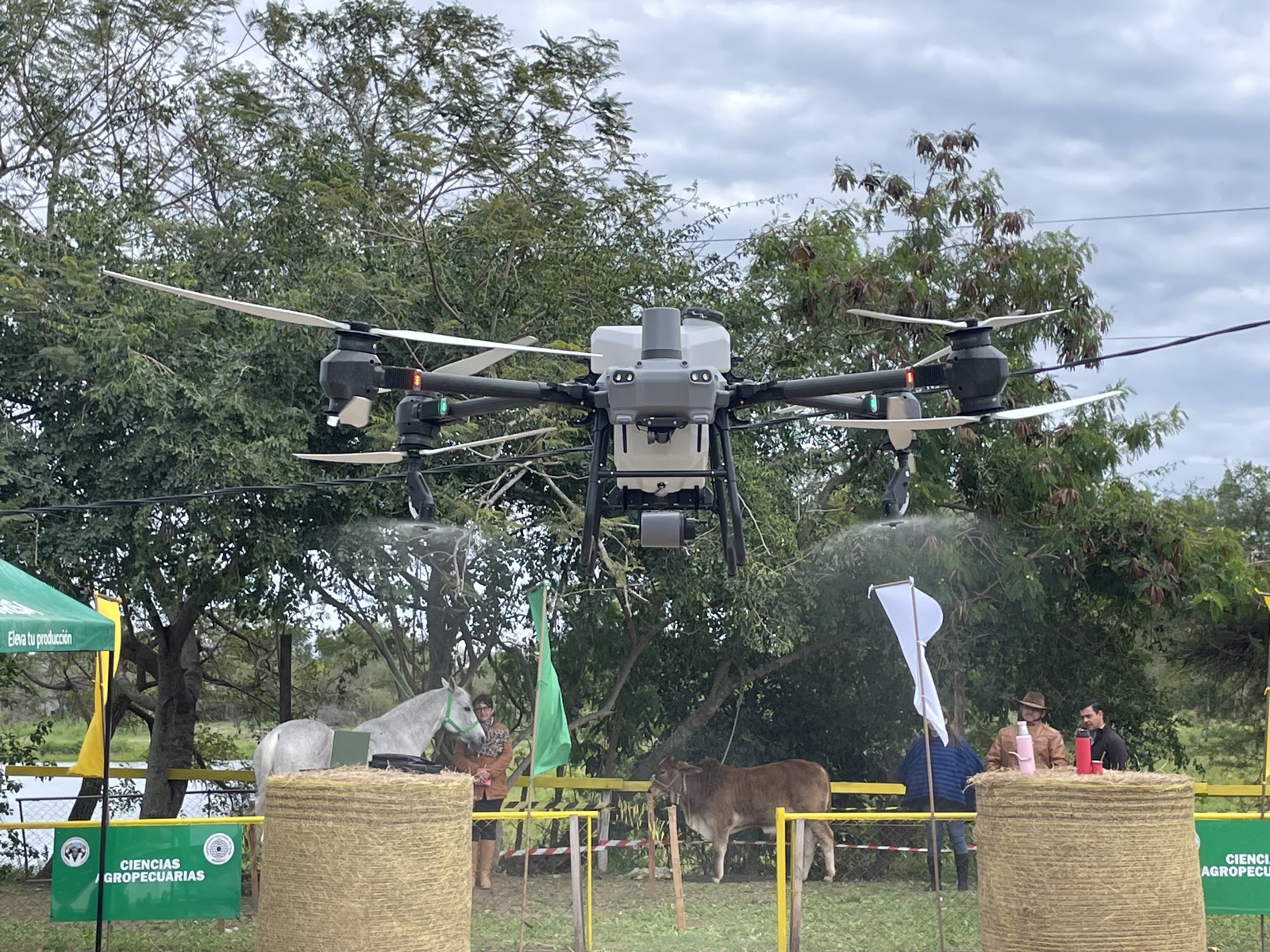
The operating numbers that matter first
| Decision | Best fit | Watch point |
|---|---|---|
| Swath width | Estimating acres/hour with ground speed and overlap. | Canopy, droplet size, altitude, and label directions can narrow the useful swath. |
| Tank size | Understanding acres per fill at the required gallons per acre. | A large tank is still limited by battery, payload rules, and refill time. |
| Battery system | Keeping the aircraft moving during a real field day. | Charger/generator capacity is often the hidden bottleneck. |
| Support | Commercial crews that cannot wait weeks for parts during spray windows. | Local service depth can matter more than a marginal spec advantage. |
Spec sheets to read with discipline
Current large agricultural platforms advertise impressive payloads, tank volumes, flow rates, and spreading or spraying modes. Treat those as ceiling numbers. In the field, the chemical label, state rules, droplet requirements, wind, crop canopy, terrain, and crew process pull the number down.
Start with two quick calculators before you compare models: acres per hour and acres per tank. If a platform cannot meet the field target in conservative math, a bigger brochure will not fix the job.
Operations proof
Prove the spray loop before comparing models.
This guide treats aircraft specs as inputs to an application workflow. Before a model shortlist matters, the job needs a workable rate, swath, refill plan, battery rotation, calibration method, and legal authority.
Application plan
Target crop, product label, GPA, droplet goal, swath, speed, and weather cutoff.
Landing-zone loop
Mix, fill, battery swap, inspection, log, and relaunch without the aircraft waiting.
Model handoff
Once the loop works on paper, compare DJI, XAG, Hylio, ABZ, or other platforms side by side.
The math that changes the buying conversation
| Metric | Value | Why it matters |
|---|---|---|
| Tank coverage at 2 GPA | 10 gal tank = 5 acres; 13 gal = 6.5 acres; 20 gal = 10 acres | Low carrier rates make tank size look powerful, but coverage and label fit have to be validated. |
| Tank coverage at 5 GPA | 10 gal tank = 2 acres; 13 gal = 2.6 acres; 20 gal = 4 acres | Higher carrier rates can make refill cadence the dominant constraint. |
| Coverage formula | Acres per tank = tank gallons / gallons per acre | This is the first number to run before comparing payload classes. |
| Field capacity formula | Acres/hr = swath ft x speed mph x 0.1212 x efficiency | Overlap, turns, refill time, and battery swaps pull the theoretical number down. |
The refill loop is the real production line
A spray drone crew is closer to a pit crew than a camera-drone pilot. One person may fly, one may mix and load, one may manage batteries and generator output, and one may handle records or spot. Smaller farms can compress those roles, but the work still exists. Every minute spent searching for a jug, cooling a battery, or moving the landing mat comes out of acres per hour.
Landing zone
The landing zone needs clean water or carrier, product handling, measuring equipment, spill control, a battery lane, shade or cooling discipline, and enough room to keep people clear of rotors and spray equipment.
Crew rhythm
The pilot should not be hunting for chemical, nozzles, cables, gloves, or records between flights. If the crew cannot reset the aircraft faster than the battery/tank cycle, the aircraft waits.
Regulatory reality for pesticide work
In the United States, commercial drone spraying can involve FAA small UAS rules, Remote ID, pesticide applicator certification, product-label directions, state pesticide agencies, and in some cases agricultural aircraft rules. Operators should verify both aviation and pesticide authority before accepting work.
Do not assume a Part 107 certificate alone makes aerial pesticide application lawful. The pesticide side is its own compliance track, and state requirements can vary.
Ohio State Extension also makes a useful caution: drone sprayers may complement ground and conventional aerial application, but they are not a universal replacement. Drone spraying is strongest where timeliness, access, targeted work, or field conditions favor a small unmanned aircraft. It is weaker when broad, high-volume coverage is the whole job.
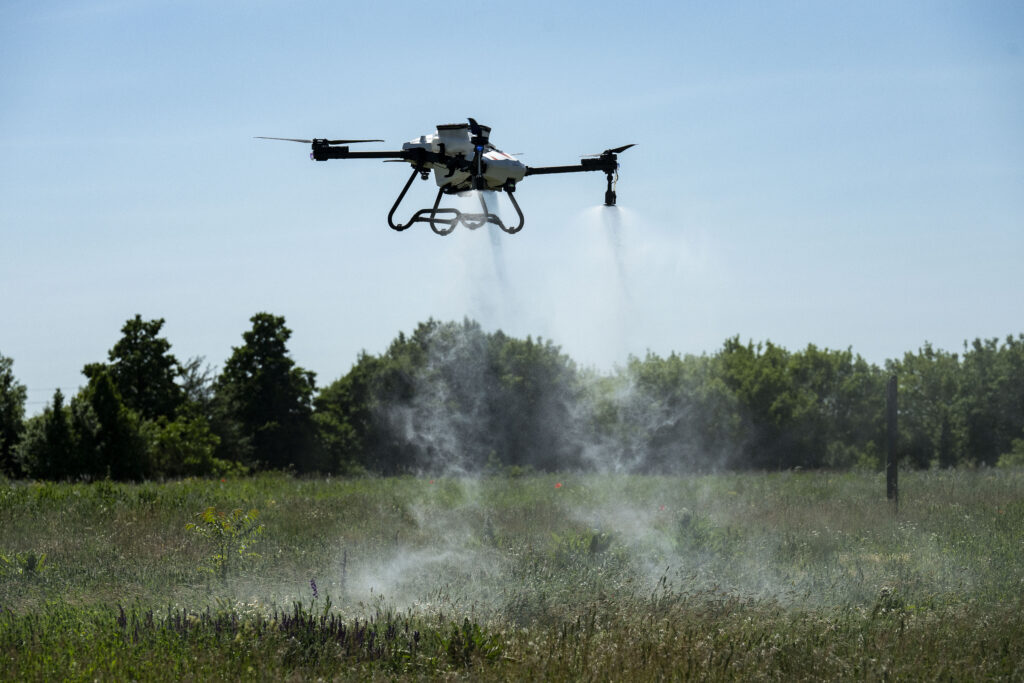
Calibration and coverage checks
Drone spraying still needs calibration discipline. Operators should verify output, droplet behavior, swath consistency, and coverage in the target crop rather than assuming the factory defaults match the job. Water-sensitive paper, test passes, and conservative weather calls are not busywork; they are what separate an aircraft demo from a pesticide application.
The hardest applications are usually not the prettiest videos. Dense canopy, orchard or vineyard geometry, steep terrain, edge drift, and small irregular fields all need more planning than a flat row-crop pass.
A practical first test is water only: run the intended altitude, speed, swath, nozzle setup, and turn pattern on a safe test area, then check whether the pattern looks like what the plan assumes. If the coverage is uneven in water, it will not become precise because the tank holds a pesticide mix.
Ownership vs hiring a service
Farms should lean toward ownership when they have repeatable acres, tight timing windows, staff who can train, and a crop mix where aerial access solves a real problem. Hiring a service is often better for occasional rescue applications, first-season testing, or farms that do not want to own batteries, chargers, spares, software, insurance, and regulatory maintenance.
Service providers should quote conservatively. Build in setup time, weather interruptions, recordkeeping, transport, battery cycling, cleanup, and a support margin for pumps, nozzles, arms, and batteries. Farms should ask for the same details before comparing a service quote with ownership.
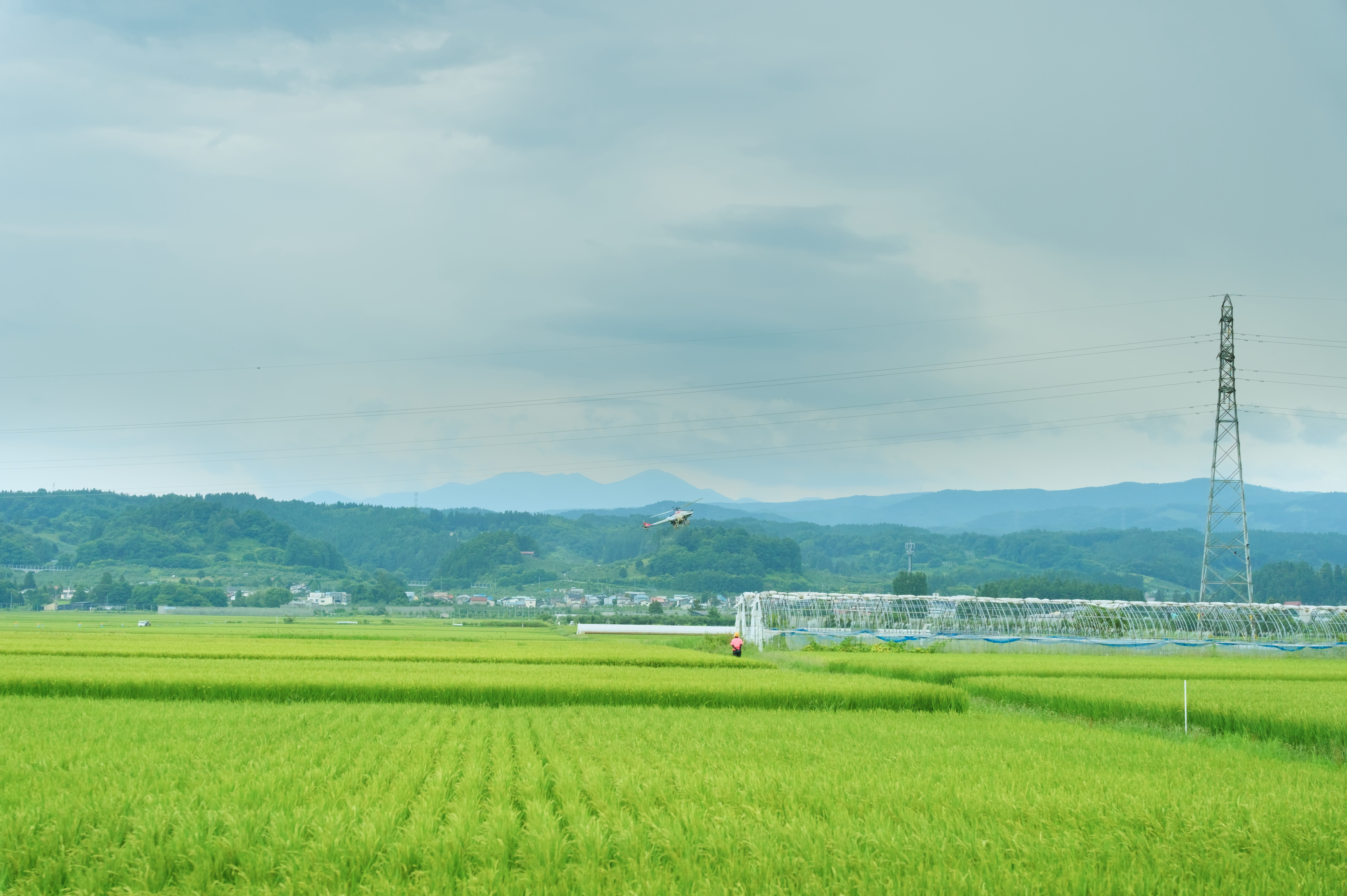
Bottom line for operators
The aircraft is the visible part of a spray-drone program, but the productive system is the whole loop: legal authority, label fit, calibrated coverage, refill discipline, battery rotation, local support, and records that can survive a customer or regulator asking what happened in the field.